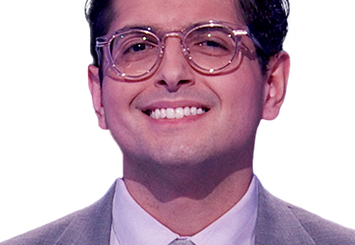
Who Is Webster Guan From Jeopardy?
Webster Guan is the kind of contestant who seems perfectly suited for the Jeopardy! stage. A biotechnology data scientist, chemical engineer, and analytics leader, Guan has spent his career tackling some of the most complex scientific challenges in medicine, neuroscience, and artificial intelligence. Based in Cambridge, Massachusetts, he combines expertise in chemical engineering, biomedical imaging, machine learning, computer vision, and data science to develop technologies that help researchers better understand the human brain.
Currently serving as Director of Analytics and Data Science at LifeCanvas Technologies, Guan leads the development of advanced computational tools designed to analyze enormous biological imaging datasets. His work sits at the cutting edge of biotechnology, where engineering, computer science, and medicine intersect. While viewers may know him as a Jeopardy! contestant, his professional accomplishments place him among a new generation of scientists helping shape the future of biomedical research.
Contents
- 1 A Future Scientist Begins at Caltech
- 2 Earning Three Advanced Degrees at MIT
- 3 Revolutionizing Brain Imaging Through Research
- 4 Applying Artificial Intelligence to Biology
- 5 Leading Analytics and Data Science at LifeCanvas Technologies
- 6 Success in Data Science Competitions
- 7 Engineering Solutions Beyond the Laboratory
- 8 A Multilingual Scientist and Community Leader
- 9 Life Beyond Jeopardy!
- 10 Webster Guan Quick Facts
A Future Scientist Begins at Caltech
Webster Guan’s journey toward becoming a biotechnology leader began at the California Institute of Technology (Caltech), one of the world’s most prestigious science and engineering institutions. There, he earned a Bachelor of Science degree with Honors in Chemical Engineering between 2012 and 2016.
While at Caltech, Guan became involved in numerous academic and extracurricular organizations. He participated in the American Institute of Chemical Engineers, joined the Tau Beta Pi Engineering Honor Society, competed with the Men’s Volleyball Club, and contributed to Engineers Without Borders. These experiences allowed him to develop both technical expertise and leadership skills that would later define his professional career.
Even during his undergraduate years, Guan displayed an interest in applying engineering principles to solve real-world problems. His academic performance and research experiences positioned him for admission to one of the nation’s most competitive graduate programs.
Earning Three Advanced Degrees at MIT
After graduating from Caltech, Guan continued his education at the Massachusetts Institute of Technology (MIT), where he would spend the next several years conducting groundbreaking research and earning multiple advanced degrees.
At MIT, he earned a Master of Science in Chemical Engineering Practice before completing a Ph.D. in Chemical Engineering. Along the way, he also completed a Minor in Biomedical Data Analysis, reflecting his growing interest in the intersection of engineering, biology, and computational science.
One of the most prestigious honors of his graduate career was being selected as a National Science Foundation Graduate Research Fellow. The NSF Fellowship is awarded to exceptional graduate students pursuing innovative research in science, technology, engineering, and mathematics. Receiving the fellowship placed Guan among a select group of researchers recognized for their academic excellence and scientific potential.
His doctoral work was conducted in the renowned Kwanghun Chung Lab, where he contributed to pioneering efforts aimed at transforming how scientists study biological tissues and neural systems.
Revolutionizing Brain Imaging Through Research
One of Guan’s most significant scientific contributions involved developing tissue transformation technologies that convert biological tissue into transparent hydrogel structures.
These innovative techniques allow researchers to visualize and analyze complex biological systems in ways that were previously impossible. By making brain tissue transparent while preserving its molecular structure, scientists can study neural networks and cellular relationships across entire brain regions.
Guan’s research focused on improving chemical transport within these engineered tissues and developing computational models that support large-scale biological imaging. His work contributed to efforts aimed at mapping neural connectivity throughout the brain and improving understanding of neurological diseases.
His research also supported Alzheimer’s disease studies, where advanced imaging and machine learning techniques were used to identify and analyze disease-related biological markers. These projects demonstrate the increasingly important role that data science plays in modern biomedical research.
Applying Artificial Intelligence to Biology
Throughout his career, Guan has been at the forefront of applying artificial intelligence and machine learning techniques to scientific problems.
His work has included developing image-processing algorithms capable of reconstructing large human brain tissue samples and creating deep-learning models for detecting Alzheimer’s disease plaques. These technologies help researchers analyze enormous volumes of biological data more quickly and accurately than traditional methods allow.
Beyond neuroscience, Guan has worked on machine learning projects involving recurrent neural networks for protein structure prediction and multimodal attention models designed to classify lung pathology images. Such projects highlight his ability to bridge multiple scientific disciplines, combining engineering, biology, and computer science to solve complex research challenges.
His expertise in computer vision, image analysis, and machine learning has become increasingly valuable as scientific datasets continue growing in size and complexity.
Leading Analytics and Data Science at LifeCanvas Technologies
After years of academic research, Guan transitioned into biotechnology leadership roles at LifeCanvas Technologies, a company focused on advanced imaging technologies and neuroscience research tools.
He initially joined the company as Principal Image Data Scientist before being promoted to Director of Analytics and Data Science in September 2024. In his current position, he leads the development of sophisticated software platforms and computational systems used to analyze massive three-dimensional biological imaging datasets.
Among his contributions has been the development of SmartAnalytics image analysis software and post-processing tools for light-sheet microscopy, a powerful imaging technique used to visualize biological structures at high resolution. His work helps researchers transform raw imaging data into meaningful scientific insights.
As biological imaging technologies continue advancing, Guan’s leadership helps ensure that researchers can effectively manage and interpret terabyte-scale datasets generated by modern experiments.
Success in Data Science Competitions
In addition to his professional and academic accomplishments, Guan has earned recognition through several prestigious analytics and data science competitions.
He won the 2019 Citadel Boston Regional Datathon, a competition that challenges participants to solve complex data-driven problems under intense time constraints. He also reached the finals of the 2019 Citadel Data Open Championship, one of the most competitive data science contests in the world.
His analytical abilities were further demonstrated when he became a finalist in the 2018 NBA Basketball Analytics Hackathon, where participants use statistical modeling and data analysis to address challenges within professional basketball.
These achievements highlight his versatility as a data scientist capable of applying quantitative methods across a wide range of fields.
Engineering Solutions Beyond the Laboratory
Guan’s impact extends well beyond research laboratories and corporate offices. Through Engineers Without Borders, he co-led a project to design and construct a clean water system in Ilam, Nepal.
The project improved access to clean water for more than 100 households, demonstrating how engineering expertise can directly improve quality of life in underserved communities. Such projects require not only technical knowledge but also collaboration, leadership, and cultural awareness.
He has also volunteered as a mathematics and science tutor for underserved students in Pasadena, California, helping younger learners build confidence and skills in STEM subjects. These efforts reflect a broader commitment to education and community service.
A Multilingual Scientist and Community Leader
Beyond his technical accomplishments, Guan is fluent in English, Chinese, and French, giving him the ability to communicate across multiple linguistic and cultural communities.
He has also held leadership positions within the MIT graduate community, including serving as Vice President of Resources for the Sidney Pacific Graduate Community. His involvement helped support fellow graduate students while strengthening one of MIT’s largest residential communities.
These leadership experiences complement his scientific achievements and demonstrate an ability to manage both technical and interpersonal challenges.
Life Beyond Jeopardy!
Webster Guan’s appearance on Jeopardy! introduces audiences to a scientist whose career reflects the increasingly interdisciplinary nature of modern innovation.
His work spans chemical engineering, neuroscience, biotechnology, artificial intelligence, machine learning, and public service. Whether developing advanced brain imaging technologies, leading analytics teams, building clean water infrastructure, or mentoring future scientists, he has consistently pursued opportunities to solve meaningful problems.
The same intellectual curiosity that has driven his success in research and industry also makes him a natural fit for Jeopardy!, where broad knowledge and analytical thinking are essential ingredients for success.
Webster Guan Quick Facts
| Field | Details |
|---|---|
| Full Name | Webster Guan |
| Residence | Cambridge, Massachusetts, United States |
| Profession | Biotechnology Data Scientist and Chemical Engineer |
| Current Position | Director of Analytics and Data Science |
| Current Employer | LifeCanvas Technologies |
| Education | Massachusetts Institute of Technology (MIT) |
| Degrees | Ph.D., M.S., and Minor in Biomedical Data Analysis |
| Undergraduate School | California Institute of Technology (Caltech) |
| NSF Fellow | National Science Foundation Graduate Research Fellow |
| Research Areas | Biotechnology, Neuroscience, Machine Learning, Computer Vision |
| Languages | English, Chinese, French |
| Industry Experience | LifeCanvas Technologies, Merck, Woodside Energy, Chevron Phillips Chemical Company |
| Competition Achievements | Citadel Boston Regional Datathon Winner, Citadel Data Open Finalist |
| Community Service | Engineers Without Borders Clean Water Project in Nepal |
| Technical Expertise | AI, Data Science, Image Processing, Molecular Biology, Microscopy |
| Publications | Multiple scientific publications, including work in Science |
| Known For | Jeopardy! Contestant and Biotechnology Research Leader |