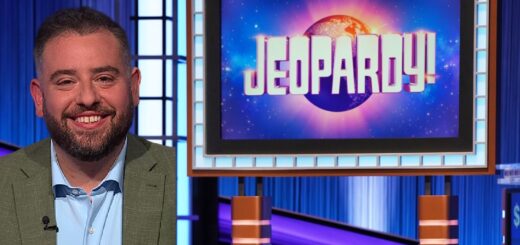
Who is Max Genecov from Jeopardy?
Max Genecov stands out as a uniquely interdisciplinary figure, bringing together expertise from psychology, physics, astronomy, and the humanities. Based in Philadelphia, he is currently pursuing a Ph.D. in Clinical Psychology at the University of Pennsylvania, where his work explores the stability of happiness and broader questions within both positive and clinical psychology. His research reflects a growing interest in understanding how well-being can be measured, maintained, and improved over time.
Before turning his focus to psychology, Genecov’s academic path was firmly rooted in the physical sciences. He began his higher education at Brown University, where he undertook a dual concentration in Physics and English. This combination highlights both his analytical rigor and his strength in communication. During his time at Brown, he completed dual theses and earned Magna Cum Laude honors, alongside induction into the prestigious Phi Beta Kappa society. His early work included research in dark matter and solar physics, laying a strong scientific foundation that would influence his later pursuits.
Contents
From Astrophysics to Psychology
Genecov’s transition from astrophysics to psychology is one of the most compelling aspects of his career. After graduating from Brown, he continued into a Ph.D. program in Astronomy and Astrophysics at the University of California, Berkeley. There, he worked as a graduate student researcher focusing on gamma-ray burst afterglow modelling and high-energy theory. His contributions included scientific software development and the analysis of observational data from advanced telescopes.
While at Berkeley, he also served as a Graduate Student Instructor, teaching courses in astronomy and cosmology. This experience not only demonstrated his depth of knowledge but also his ability to communicate complex scientific ideas clearly. Despite his success in astrophysics, Genecov made a significant pivot toward psychology, enrolling in a post-baccalaureate program in Psychological Science at the University of California, Irvine. This period marked a shift toward understanding human behavior and mental processes, ultimately leading him to his current doctoral work at Penn.
Research Focus on Happiness and Mental Health
At the University of Pennsylvania, Genecov’s research centers on the concept of happiness and its stability over time. His work sits at the intersection of positive psychology, which examines what helps individuals thrive, and clinical psychology, which addresses mental health challenges. This dual focus allows him to approach psychological well-being from both a preventative and therapeutic perspective.
His research aims to answer fundamental questions about whether happiness is a fixed trait or something that can be cultivated and sustained. By combining rigorous data analysis with psychological theory, Genecov contributes to a growing body of work that seeks practical applications for improving quality of life. His background in quantitative science supports this work, enabling him to approach psychological questions with a high level of analytical precision.
A Parallel Career in Journalism
In addition to his academic achievements, Genecov has developed a strong presence as a freelance journalist. His writing has appeared in major publications including The New York Times, Grist, and Polygon, where he covers a wide range of topics spanning science, technology, and internet culture. This work reflects his ability to translate complex ideas into engaging and accessible narratives.
His dual background in English and science gives him a distinctive voice in journalism. Whether explaining scientific discoveries or exploring cultural trends, Genecov brings depth and clarity to his reporting. This parallel career complements his academic work, allowing him to reach broader audiences and contribute to public understanding of science and psychology.
Technical Skills and Research Experience
Genecov’s skill set is both extensive and highly technical, reflecting years of experience in scientific research. He is proficient in programming languages such as Python and IDL, as well as tools used in data analysis and scientific computing. His work has involved analyzing telescope data from instruments like KAIT and Swift UVOT, as well as contributing to major research efforts such as the LUX dark matter experiment.
Earlier in his career, he also completed internships in solar physics, including work at the High Altitude Observatory. These experiences provided hands-on exposure to experimental physics and observational research. His background in CAD/CAM and computational modelling further demonstrates his versatility and technical depth, making him well-equipped to tackle complex research questions across multiple disciplines.
A Unique Profile on the Jeopardy Stage
As a Jeopardy contestant, Max Genecov brings a rare combination of scientific expertise, psychological insight, and communication skills. His academic journey, which spans the study of the universe at its largest scales to the intricacies of human happiness, sets him apart as a well-rounded and intellectually curious competitor.
His ability to navigate diverse fields, from astrophysics to journalism, reflects a broad knowledge base that aligns well with the demands of Jeopardy. With a background that blends analytical thinking, research experience, and storytelling, Genecov represents the kind of multidimensional contestant that the show is known for featuring.
Name: Max Genecov
Location and Residence: Philadelphia, Pennsylvania, United States
Profession and Jobs: Clinical Psychology Ph.D. Candidate at University of Pennsylvania; Freelance Journalist; Former Graduate Student Researcher at UC Berkeley; Former Graduate Student Instructor at UC Berkeley; Post-Baccalaureate Researcher at UC Irvine; Physics Researcher at Brown University; Solar Physics Intern at High Altitude Observatory
Gender and Sex: Male
Age and Date of Birth:
Nationality and Ethnicity: American (Caucasian)
Education and School: University of Pennsylvania (PhD in Clinical Psychology, 2019–2025); University of California, Berkeley (PhD studies in Astronomy and Astrophysics, 2015–2017); Brown University (Sc.B. in Physics and English, 2011–2015, Magna Cum Laude, Phi Beta Kappa); UC Irvine (Post-Baccalaureate in Psychological Science, 2018–2019)
Relationships (Married, Dating, Sexuality) and Family:
Biography and More Details: Focuses on happiness and positive psychology research; published journalist for The New York Times, Grist, and Polygon; background in astrophysics including gamma-ray burst modelling and high-energy theory; contributed to LUX dark matter experiment and solar physics research; taught university-level astronomy and cosmology; skilled in Python, IDL, CAD/CAM, data analysis, and scientific computing; interdisciplinary academic career bridging science and psychology