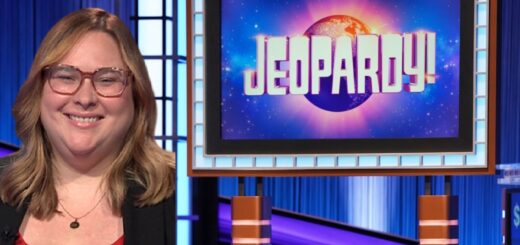
Who is Andrew Ford from Jeopardy?
Andrew Ford is a data scientist based in Madison, Wisconsin, whose career blends advanced mathematics, computational science, and practical data analysis. With a doctorate in Applied Mathematics and professional experience spanning government analytics, software development, and pharmaceutical data management, he has developed expertise in solving complex problems using statistical and computational methods.
His professional journey includes research in molecular modeling, technical roles within healthcare technology and government agencies, and work improving data systems in scientific environments. Appearing as a contestant on Jeopardy highlights a career shaped by analytical thinking, programming expertise, and academic research.
Academic Path and Doctoral Research in Applied Mathematics
Andrew Ford earned a Ph.D. in Applied Mathematics from the University of North Carolina at Chapel Hill, completing the program in May 2022. His doctoral dissertation, titled “Molecular Dynamics Modeling of Heterogeneous Structure and Rheology of Human Lung Mucus,” examined how mucus behaves at the molecular level within the respiratory system.
The research focused on understanding the structure and flow properties of lung mucus. Rheology, the study of how materials deform and flow, plays an important role in understanding respiratory health and conditions that affect breathing. Ford used computational simulations to model how mucus behaves under different conditions and how its structure changes at the molecular scale.
During his graduate studies, he built predictive molecular dynamics models using stochastic differential equations. These models were implemented using scientific software tools such as LAMMPS and VMD, both widely used in molecular physics and computational chemistry. His research involved running large-scale simulations, analyzing simulation outputs using image analysis and statistical techniques, and interpreting results through mathematical modeling.
In addition to the theoretical work, Ford worked to optimize the computational performance of his simulations. By improving multithreading capabilities and memory management, he was able to increase efficiency and run more complex simulations. This blend of mathematics, physics, and computing laid the foundation for his later work in data science and software engineering.
Professional Experience in Data Science and Analytics
Ford’s professional career includes several technical roles that apply advanced statistical and computational skills. From December 2024 to September 2025, he worked as a Mathematical Statistician, commonly known as a Data Scientist, for the Internal Revenue Service.
Within the IRS Research, Applied Analytics, and Statistics division, he worked on projects designed to improve the quality and reliability of data within the Compliance Data Warehouse. The division focuses on analyzing large data sets related to tax administration and compliance.
His work included analyzing tax data to evaluate the effectiveness of clean energy tax credits and helping design frameworks for internal data warehouse systems. These projects required careful statistical modeling, data cleaning, and analysis of large government data sets.
Since October 2025, Ford has served as a Data Management Consultant at Object Pharma, Inc. In this role, he works on digitizing decades of historical laboratory records that previously existed only in paper form. By converting these records into searchable digital databases, he improves accessibility and efficiency within the organization’s research environment.
He also develops interactive Excel-based tools used for laboratory scheduling and data organization. These tools allow scientists and staff to coordinate experiments and manage research workflows more effectively.
Software Development Work in Healthcare Technology
Before transitioning into data science roles, Ford gained extensive experience as a software developer. From June 2022 to September 2023, he worked at Epic Systems in Verona, Wisconsin, a major developer of electronic health record software used by hospitals and healthcare systems.
At Epic, he worked on the Tapestry platform, which is designed to manage health insurance claims within the company’s broader electronic health record ecosystem. His responsibilities included building data pipelines that move and process large amounts of information between healthcare systems.
He also implemented validation systems that helped reduce data entry errors and improve the accuracy of insurance claim records. These tools ensured that healthcare providers and insurers could process claims more efficiently.
The role also involved direct collaboration with healthcare clients to improve software workflows. Working with client organizations allowed Ford to refine system features and ensure the platform met the operational needs of hospitals and insurance providers.
Earlier technical experience included a software development internship at Open Systems International. During that internship, he developed tools used to reproduce client power grid systems for debugging and system testing.
Teaching and Academic Instruction
Alongside his research at the University of North Carolina at Chapel Hill, Ford spent nearly six years serving as both a Graduate Research Assistant and Graduate Teaching Assistant. In addition to conducting research, he played an active role in teaching undergraduate mathematics courses.
He served as the instructor of record for several classes and assisted with courses including Calculus I, Calculus II, Calculus III, Differential Equations, and Linear Algebra. Teaching these foundational subjects required strong communication skills and the ability to explain complex mathematical concepts clearly to students.
His teaching contributions were recognized by the department when he received a nomination for the J. Burton Linker Award for excellence in undergraduate instruction. The nomination highlighted his effectiveness as an educator and his commitment to supporting students studying mathematics.
Earlier in his career, Ford also worked as a mathematics tutor for Varsity Tutors and served as an Undergraduate Teaching Assistant at the University of Minnesota.
Education and Academic Foundations
Andrew Ford began his academic journey at the University of Minnesota Twin Cities, where he earned a Bachelor of Science in Mathematics and Statistics between 2011 and 2015. His undergraduate education provided the mathematical and statistical foundations that later shaped his graduate research and professional career.
During his time at the university, he also gained teaching experience by serving as an Undergraduate Teaching Assistant, supporting mathematics courses and assisting faculty with instruction.
After completing his undergraduate studies, he continued his academic career at the University of North Carolina at Chapel Hill. His graduate education combined mathematics, computational science, and physics modeling, preparing him for advanced work in research and data science.
Technical Skills and Professional Certifications
Andrew Ford’s technical skill set spans several programming languages and data analysis tools widely used in data science. His programming experience includes Python, SQL, R, and C++, along with Git for version control.
He has experience working with statistical modeling, quantitative analytics, cluster analysis, and data visualization. His background in computational modeling also includes experience in physics simulations and object-oriented software design.
Ford has also completed machine learning certifications through DeepLearning.AI and Stanford University. These programs covered topics such as supervised machine learning techniques including regression and classification, advanced learning algorithms, and unsupervised learning methods including recommender systems and reinforcement learning.
He maintains an active professional presence on LinkedIn, where he participates in discussions related to mathematics, analytics, and research and maintains a network of professional contacts in technical fields.
Name: Andrew Ford
Location and Residence: Madison, Wisconsin, United States
Profession and Jobs: Data Scientist; Data Management Consultant at Object Pharma, Inc. (Oct 2025–Present); Mathematical Statistician (Data Scientist) at the Internal Revenue Service (Dec 2024–Sep 2025); Software Developer at Epic (Jun 2022–Sep 2023); Graduate Research Assistant and Mathematical Modeler at the University of North Carolina at Chapel Hill (Aug 2018–May 2022); Graduate Teaching Assistant at UNC Chapel Hill (Aug 2016–May 2022); Mathematics Tutor at Varsity Tutors (Sep 2015–Aug 2016); IAH Analyst at Doctors Making Housecalls (Apr 2016–Jul 2016); Undergraduate Teaching Assistant at the University of Minnesota (Jan 2014–May 2015); Software Development Intern at Open Systems International (May 2014–Aug 2014)
Gender and Sex: Male
Age and Date of Birth:
Nationality and Ethnicity: American
Education and School: Ph.D. in Applied Mathematics, University of North Carolina at Chapel Hill (Aug 2016–May 2022); Dissertation: Molecular Dynamics Modeling of Heterogeneous Structure and Rheology of Human Lung Mucus. Bachelor of Science in Mathematics and Statistics, University of Minnesota Twin Cities (2011–2015)
Relationships (Married/Dating/Sexuality) and Family:
Biography and More Details: Data scientist with expertise in mathematics, statistics, and software development. Experienced in Python, SQL, R, C++, statistical analysis, data visualization, and data pipeline development. Developed predictive molecular dynamics models studying lung mucus and respiratory disorder treatments during Ph.D. research. Built data pipelines and validation tools at Epic for health insurance claims systems. Worked at the IRS improving data quality in the Compliance Data Warehouse and analyzing clean energy tax credit usage. Currently working as a data management consultant digitizing and organizing pharmaceutical data records and building Excel-based scheduling tools. Taught mathematics courses including Calculus I–III, Differential Equations, and Linear Algebra as instructor of record and teaching assistant. Nominated for the J. Burton Linker Award for undergraduate teaching. Certifications include Supervised Machine Learning: Regression and Classification, Advanced Learning Algorithms, and Unsupervised Learning, Recommenders, and Reinforcement Learning through DeepLearning.AI and Stanford University. Skills include programming languages, quantitative analytics, cluster analysis, object-oriented programming, software design, and physics modeling. LinkedIn profile: https://www.linkedin.com/in/andrew-ford-99092663