A version of this theoretical economic process was “horse & Sparrow”; if you fed the horse enough oats, the sparrows Fed afterwards
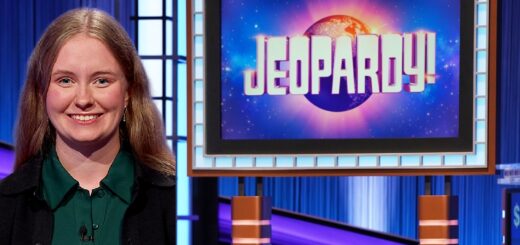
Thursday’s Final Jeopardy clue drew from the world of economics and metaphorical thinking, challenging contestants in the category Theories. The clue read: A version of this theoretical economic process was “horse & sparrow”; if you fed the horse enough oats, the sparrows fed afterwards.
Contents
What is Trickle-down Economics?
This clue referenced a satirical analogy once used to critique the concept of wealth flowing from the top of an economic hierarchy to the bottom. The idea behind the “horse and sparrow” theory was that if the wealthiest were given enough resources—represented by oats—the leftovers would eventually benefit those lower down the economic ladder. The metaphor captured the essence of trickle-down economics, a controversial theory often invoked in discussions of tax policy and wealth distribution.
Trickle-down economics suggests that policies favoring the wealthy, such as tax cuts or deregulation, will ultimately lead to increased economic growth that benefits all levels of society. Proponents argue that when high-income individuals and corporations receive financial benefits, they reinvest that wealth through business expansion, job creation, and consumer spending, thereby lifting the overall economy.
The phrase “trickle-down” is not commonly used by economists themselves, and it often serves as a critical label applied by opponents of the theory. Critics argue that the benefits of such policies do not significantly reach lower-income groups, and instead contribute to wealth inequality. The “horse and sparrow” version of the theory dates back to the 19th century, a time when skepticism of such ideas was already circulating in political and economic commentary.
Historical Context of the “Horse and Sparrow” Theory
The “horse and sparrow” analogy is believed to have been coined in the late 1800s, and it was notably used to lampoon economic policies that prioritized the wealthy under the assumption that benefits would eventually reach the poor. The earliest known use of the phrase was attributed to American political economist John Kenneth Galbraith, although its roots stretch even further back.
This framing emerged in opposition to what later came to be known as supply-side economics, which gained particular prominence in the 1980s during the Reagan administration. Reaganomics emphasized tax cuts for high earners and corporations, reduced regulation, and overall market liberalization. While its supporters point to economic growth during that period, detractors note the widening income gap and argue that prosperity did not adequately “trickle down.”
How the Theory Has Evolved Over Time
While trickle-down economics remains politically and ideologically divisive, variations of the theory continue to influence fiscal policy debates. The idea has re-emerged in discussions around tax reform bills, corporate incentives, and stimulus strategies. Even when not explicitly labeled as such, the basic premise of aiding the top with the expectation of broader benefits continues to shape economic rhetoric.
Empirical studies on the effectiveness of trickle-down economics have yielded mixed results. Some research finds limited evidence that tax cuts for the wealthy lead to long-term economic growth, while others suggest that increased capital at the top does not necessarily lead to proportional job creation or wage increases. The enduring debate reflects differing values about fairness, economic strategy, and government intervention.
A Clever Clue with Deeper Implications
Jeopardy’s clue offered more than a test of economic knowledge—it served as a window into the history of public discourse on wealth and inequality. By using a vivid metaphor that predates modern terminology, the clue pointed to the long-standing criticisms surrounding policies that rely on indirect benefits for the lower classes.
While the game show format doesn’t allow time for extended analysis, clues like this highlight Jeopardy’s ability to bring complex social and political ideas into the mainstream. Whether viewed as effective economic strategy or as a flawed justification for favoring the wealthy, trickle-down economics remains a defining—and polarizing—idea in the history of economic thought.